
The core factors that stand behind the global growth of the health and wellness app market are enhanced health awareness, challenges related to lifestyle, and smartphone adoption. What users seek at this hour is not generic health advice. Instead, data-driven and personalized guidance is in demand, the type that they can easily accommodate in their routine.
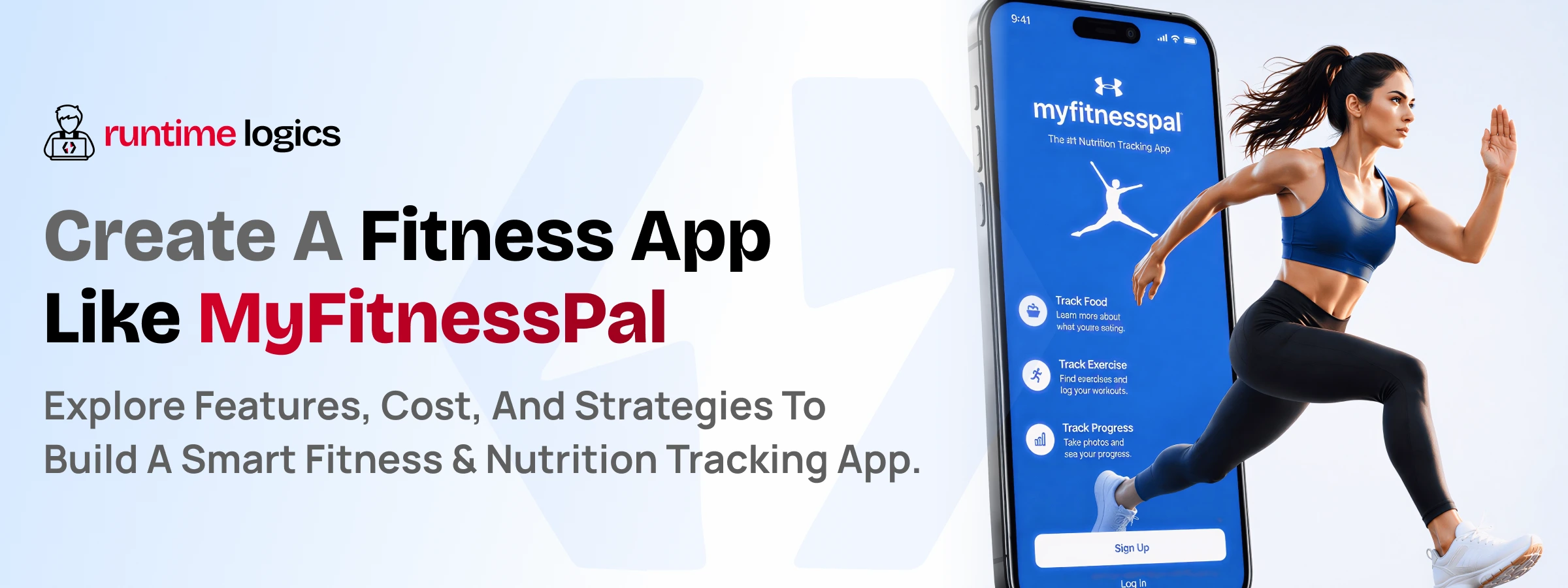
MyFitnessPal is an app that is not limited to meal logging and calorie counting. Instead, it should be perceived as a digital health companion for the long term that helps nurture sustainable habits associated with nutrition, fitness, and overall well-being. A typical app in this space forwards a highly intuitive user experience. Its modus operandi will be focused on combining trust with personalization, data accuracy, and behavioural science.
How does MyFitnessPal make money?
It is primarily through its freemium model that the MyFitnessPal app generates revenue. Here, we primarily include premium subscriptions, data partnerships, and in-app advertising.
Basic tracking is free at the MyFitnessPal app, which, nevertheless, charges users for advanced features. To monetize the free user base, the platform uses ads.
MyFitnessPal charges users a fee of around $9.99 monthly or $49.99 yearly for a premium subscription. Users enjoy an ad-free experience and benefit from deeper nutritional analysis. They receive advice associated with workout routines and custom macro goals, which includes personalized meal plans and tips tailored to their fitness objectives.
The app collaborates with nutrition coaches and health influencers to encourage premium conversions. The platform has an extensive database, which brings essence to its partnerships with fitness equipment manufacturers and health brands.
In 2023, MyFitnessPal generated $310 million in revenue.
Current market value of MyFitnessPal
The market value of MyFitnessPal is high and stands at over $1 billion in 2026. The platform is a dominant force in the fitness app market. It has benefited tremendously from the first-mover advantage and now holds the largest nutrition database globally. Their database has 18-20 million food items, and a quick barcode scanner makes things exceptionally convenient for customers.
A factor associated with MyFitnessPal’s success is the effective use of the freemium business model. The app keeps users engaged, which accounts for its increasing revenues by the year. Their user retention rates are high, and word-of-mouth has helped tremendously with the app’s adoption.
MyFitnessPal was founded in 2005, and they provided a user-friendly tool that would integrate with social features and wearables seamlessly. The concept found customer liking, and the app has now reached a global user base of over 280 million. As of 2026, the app focuses on AI integration to sustain its winning edge.
Benefits of MyFitnessPal like app development
When you undertake MyFitnessPal-like fitness and nutrition app development, it brings a host of advantages to the table. The health market today is dynamic and high in demand, and you could use your app to tap into it.
Premium subscriptions and ads will be your core source of revenue. Similarly, as you offer personalized and wellness-driven data tracking, it will nurture customer retention. Easy dashboards that track calories and number of steps taken will enhance user experience. The market for wearable devices is also huge, and you could tap into that as well via easy integrations.
AI integration, through insights and personalized coaching, will improve fitness outcomes and user experience for your customers. Community engagement will induce brand loyalty. You could, further, benefit from brand partnerships and affiliate sales.
How you can earn from a nutrition app like MyFitnessPal
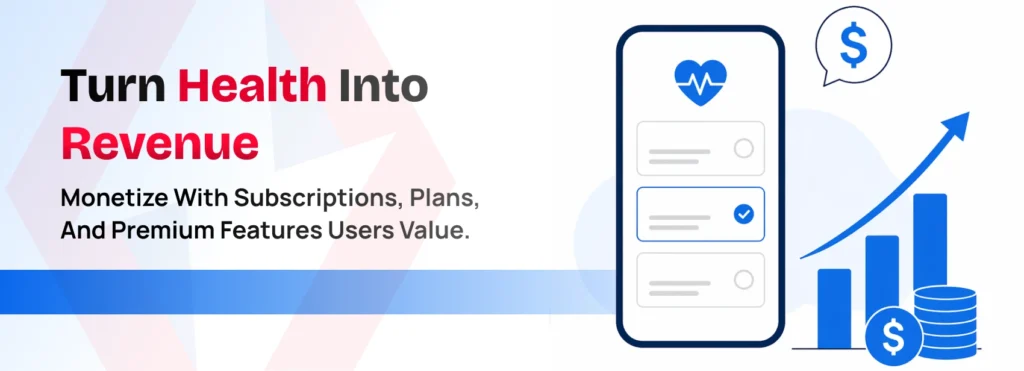
Once you build a fitness app like MyFitnessPal, you want to make the best of user engagement by using the freemium model. Herein, while offering premium subscriptions, you will make room for data-driven partnerships and in-app advertising.
Under the premium subscription, all advanced features of the app will be chargeable. Similarly, when you display targeted ads, these business owners, typically gym owners or supplement companies, will pay you for each click. You may also involve yourself with affiliate marketing, wherein you promote the concerned products over your website.
You may want to get into selling personalized plans or make the eCommerce functionality a part of your app and make revenue from all products sold.
Cost to build fitness app like MyFitnessPal
The cost to develop an app like MyFitnessPal is vastly subject to the features you want the app to have. A basic app built over a single platform with only the core features won’t cost you over $15k – 30k.
In case it is a mid-range app that you are looking for, it will be available for multiple platforms and will have AI features and integration with wearable devices. The cost for developing such an app will come in the range of $50k – $120k.
The cost to build a fitness app that features high complexity could breach $100k – $500k. This app will be characterized by premium content, community, and advanced AI.
The platform is an important factor that drives the cost to build an app like MyFitnessPal. Creating an app for a single platform is reasonably more affordable than creating an app for both iOS and Android. But, when you use React Native, you can optimize this.How to choose a right development partner for a MyFitnessPal-like fitness and nutrition app development
For a workout tracking app like MyFitnessPal, you want to take the services of a fitness app development company competent in health data modelling, high-performance UI/UX, and API integration, which may need to be done with wearables and food databases.
The vendor will want to ensure that he creates a scalable and secure user-centric app. He needs to hold specialization in cross-platform frameworks such as React Native or Flutter.
You should ensure that your vendor has full stack capabilities that cover backend development, UI/UX design, and QA testing. He needs to manage magnanimous user datasets while being in full compliance with data privacy regulations. Going through the vendor’s portfolio will deliver a fair idea of his capabilities. The best practice, in this regard, is to first formulate the MVP to test the market before going for full-scale development.
How to build a workout tracking app like MyFitnessPal
A structured approach needs to be followed for MyFitnessPal-like health and fitness app development. One starts with an MVP that has features for user profiles, exercise logging, food and calorie logging, and wearable integration. The essential features of the app include food databases that are integrated using APIs, scanning barcodes, and reporting progress.
In the strategy phase, one studies one’s competitors like HealthifyMe and MyFitnessPal, which helps one centre down upon the app’s USP. The design phase vastly encompasses creating user-friendly interfaces following intuitive wireframes, using tools such as Figma.
For cross-platform development, you’ll use Flutter or React Native. The backend will include nutrition databases, secure servers, databases, and APIs that handle user data, besides analytics. Python or Node.js will be the backend technologies.
Integration with fitness trackers is done, and the app is launched following end-to-end testing.
* Key features of fitness apps like MyFitnessPal
Features of the fitness app will cover the following:
1. Profiles
Upon registration, users are segregated by height, age, and activity level.
2. Calorie tracker
Daily intakes are logged using a barcode scanner and a searchable food database.
3. Exercise logging
Features for logging cardio and strength training exercises will be there.
4. Wearable integration
Data can be synced with Fitbit APIs, Google Fit, and Apple Health.
5. Progress monitoring
Data visualization for workout consistency, calorie intake, and weight.
How Runtime Logics can help you with MyFitnessPal-like fitness app development
When you create a nutrition app like MyFitnessPal, the right strategy, careful development, meticulous marketing, and API integrations are a must. When you understand your audience, it puts you in a better position to define your app’s features.
Runtime Logics brings to the table the right sort of expertise in frontend and backend development across platforms. We are also design experts and create winning user interfaces.
With our proven expertise in the domain of health & fitness apps, we will create a 100% customized solution for your business that finds popularity and genuinely helps users achieve their fitness goals.